News & Fuel Estimates

Unlocking South Africa’s Oil Potential: New Hydrocarbon Law Set to Boost Exploration and Production
Exploring the Game-Changing Upstream Petroleum Resources Development Bill
In a move that could reshape South Africa’s energy landscape, the nation’s oil and gas sector is fervently advocating for the swift finalization of a groundbreaking legislative framework. This framework, known as the Upstream Petroleum Resources Development Bill, promises to usher in a new era of certainty and opportunity for industry operators and producers. Simultaneously, environmental activists are intensifying their campaign to reduce fossil fuel usage, creating a dynamic backdrop for this transformative legislation.
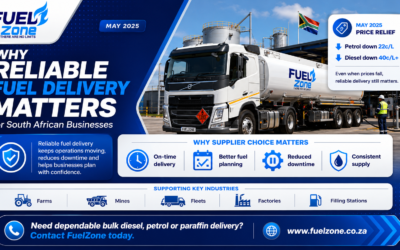
Why Reliable Fuel Delivery Matters for South African Businesses
In May 2025, South African fuel users received some relief, with petrol decreasing by 22 cents per litre and diesel decreasing by more than 40 cents per litre. Although price relief is always welcome, businesses should not become complacent. Fuel prices can move up...
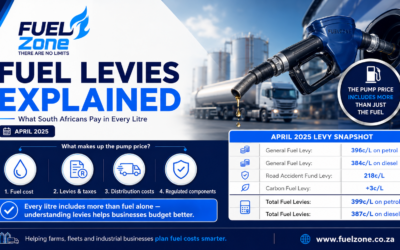
Fuel Levies in South Africa Explained for Motorists and Businesses
When South Africans talk about fuel prices, most people focus on the pump price. But the final price of petrol and diesel includes more than the fuel itself. It also includes levies, taxes, distribution costs and other regulated components. In April 2025, the general...
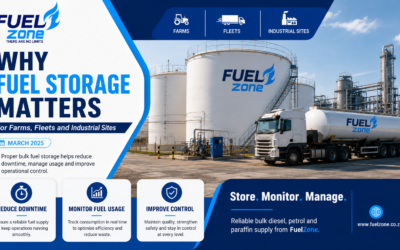
Why Fuel Storage Matters for Farms, Fleets and Industrial Sites
Fuel storage is one of the most important parts of fuel management, especially for businesses that rely on diesel, petrol or paraffin every day. In March 2025, South Africa’s monthly fuel adjustment again reminded businesses that fuel prices are influenced by local...
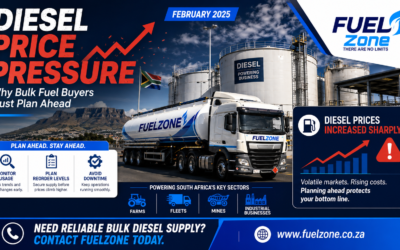
Diesel Price Pressure in South Africa: Why Bulk Fuel Buyers Must Plan Ahead
February 2025 brought a sharp fuel price increase for South African motorists and businesses. Petrol increased by 82 cents per litre, while diesel increased by R1.05 per litre for 0.05% sulphur diesel and R1.01 per litre for 0.005% sulphur diesel. Illuminating...
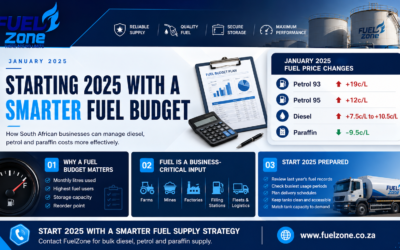
How to Budget for Petrol and Diesel in South Africa in 2025
The start of a new year is the perfect time for businesses to review fuel costs, usage patterns and supplier relationships. In January 2025, fuel prices increased again, with petrol 93 rising by 19 cents per litre, petrol 95 by 12 cents per litre, diesel by between...
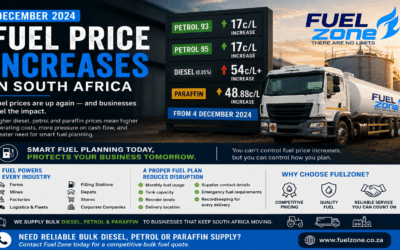
Fuel Price Increases in December 2024: Why South African Businesses Need Better Fuel Planning
Fuel prices remain one of the biggest operating costs for many South African businesses. In December 2024, South Africans saw another fuel price adjustment, with petrol 93 and 95 increasing by 17 cents per litre, diesel increasing by more than 54 cents per litre, and...
Innovations in Fuel Distribution and Logistics
The efficient distribution of fuel is critical for South Africa’s economy, ensuring industries, transport systems, and households remain powered. However, the diverse geography and infrastructure challenges in both rural and urban areas demand innovative solutions to...
Fuel Levies: How They Impact South Africans
Fuel levies are a significant component of the price consumers pay at the pump in South Africa. These charges are not just an added cost; they play a crucial role in funding infrastructure projects and safety initiatives. However, they also spark ongoing debates about...
Environmental Challenges of the Fuel Industry
South Africa’s fuel industry, like its global counterparts, is under increasing scrutiny for its environmental footprint. The reliance on traditional fuels such as petrol, diesel, and paraffin contributes significantly to greenhouse gas emissions and other forms of...
Fuel Theft in South Africa: A Growing Concern
Fuel theft has become an increasingly serious issue in South Africa, impacting the economy, the environment, and the livelihoods of countless individuals. As syndicates and opportunistic thieves target fuel pipelines, storage facilities, and delivery trucks, the...
Import and Export Dynamics of South African Fuel
South Africa’s fuel industry operates within a global context, where trade dynamics significantly impact the availability and pricing of fuel. The country’s reliance on imports for crude oil and refined products, coupled with its domestic production capabilities,...
Electric Vehicles and South Africa’s Fuel Landscape
Electric Vehicles and South Africa’s Fuel Landscape The rise of electric vehicles (EVs) is reshaping the global transportation landscape, and South Africa is no exception. As EV adoption increases, its impact on the traditional fuel industry is becoming more evident....
How the Rand-Dollar Exchange Rate Affects Fuel Prices
Fuel prices in South Africa are closely tied to global economic dynamics, particularly the Rand-Dollar exchange rate. This relationship significantly impacts the cost of petrol, diesel, and other fuels, affecting businesses and households alike. In this blog, we...
The Future of Fuel in South Africa
South Africa's fuel industry stands at a crossroads, where innovation and sustainability are reshaping the energy landscape. As global demand for cleaner, renewable energy grows, South Africa must adapt its fuel production and consumption practices to meet these...
The Role of Paraffin in South African Households
Paraffin, also known as kerosene, has long been a vital energy source for many South African households, particularly in low-income communities. Its affordability, accessibility, and versatility make it a popular choice for cooking, heating, and lighting. This blog...
Diesel: The Backbone of South African Industry
Diesel is the lifeblood of South Africa’s economy, powering key sectors like agriculture, mining, and transportation. Its reliability, energy density, and versatility make it indispensable for industrial operations and everyday logistics. This blog takes a closer look...
Understanding South Africa’s Fuel Supply Chain
South Africa’s fuel supply chain is a complex network that ensures the consistent delivery of petrol, diesel, and other petroleum products from refineries to consumers across the country. This process is critical for the economy, powering industries, transport, and...

New JAC T9 Bakkie: Features, Pricing, and Performance
Unveiling the JAC T9
The JAC T9 made its debut at the Shanghai Automotive Show just six months ago, showcasing the result of over four years of dedicated development and extensive global testing. Karl-Heinz Göbel, the CEO of JAC Motors South Africa, expressed his excitement, stating, “We are thrilled to introduce the exciting new T9 as the range-topper of our T-Series bakkies.”
Versatile Line-up
While the T9 takes the lead, JAC’s lineup includes the versatile T8 and economical T6 models, each focusing on specific target markets within the double-cab segment.
Impressive Features
The JAC T9 doesn’t disappoint when it comes to features. As standard, it offers automatic xenon headlights, LED daytime running lights, tail lamps, fog lights, black wheel arches, and striking two-tone 18-inch alloy wheels. But that’s just the beginning.
Safety First
Safety is a priority with six airbags, traction control, vehicle dynamics control, electronic stability control, hill assist, ABS with a brake override system, electronic brake-force distribution, and tyre-pressure monitoring. Rear parking sensors and a rearview camera further enhance safety.
Luxurious Upgrades
Opt for the T9 Lux model, and you’ll enjoy additional features like leather seats, a multifunction steering wheel, cruise control, automatic climate control, an electronic handbrake, an electronically adjustable driver’s seat, a 7.0-inch instrument cluster, front and rear USB ports, a wireless phone charger, and a 10.4-inch infotainment screen compatible with Apple CarPlay and Android Auto.